The Dirt Under Your Backyard Has Strong Opinions About Your Pool
Two pools, two identical budgets, two different outcomes five years later. The difference was buried four feet down before anybody poured a thing.
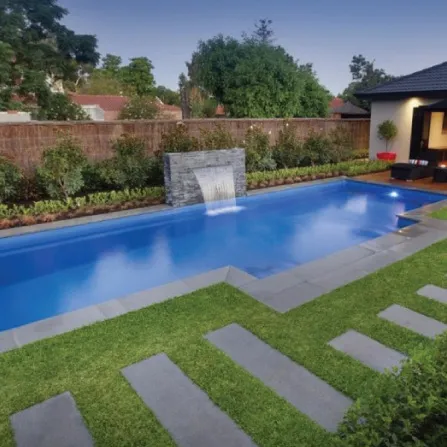
Two neighbors on the same Katy cul-de-sac put in pools the same spring. Same budget, same square footage, nearly the same shape. Five years later one of them has a hairline crack creeping along the sun shelf and the other has never called anyone but the cleaning guy. Nothing in the brochure explained the difference. The answer was sitting four feet under both yards the whole time.
Houston sits on some of the most temperamental soil in the country, and a swimming pool is the heaviest, most water-sensitive thing most homeowners will ever set on top of it. Choosing between a gunite shell and a fiberglass shell is usually framed as a money question or a looks question. In this part of Texas it is really a ground question, and the ground answers differently depending on which side of the Beltway you live on.
What the Ground Here Actually Does All Year
Greater Houston is built largely on expansive clay, the kind geologists politely call “high plasticity.” It swells when it takes on water and shrinks when it dries out, and it does both with real force. Anybody who has watched a driveway seam open up in August and close again in November has already seen it happen in slow motion.
The seasonal swing here is dramatic enough to matter. A stretch of hard drought pulls moisture out of the clay and the soil pulls away from whatever is sitting on it. Then a tropical system parks over the city, drops a foot of rain in two days, and that same clay swells back with enough pressure to lift concrete. Your pool shell is caught in the middle of that argument for its entire life.
- Clay soils in the region can shift several inches vertically between a dry September and a wet spring.
- Water tables in low-lying neighborhoods can rise fast enough to put upward pressure on an empty shell.
- Older neighborhoods often sit on fill of unknown quality, which behaves nothing like the yard next door.
- Mature oaks and pecans pull enormous amounts of moisture out of the soil on one side of a yard and not the other, creating uneven movement.
None of this means a pool is a bad idea here. Thousands of them sit happily in Houston backyards. It means the shell you pick, and the engineering under it, needs to be chosen with the local dirt in mind rather than a generic spec sheet.
Gunite: Concrete That Gets Shaped to the Yard, Not the Other Way Around
Gunite is a dry mix of cement and sand shot through a hose at high pressure onto a steel rebar cage that has been tied in the shape of your pool. It is messy, loud, and genuinely impressive to watch. The result is a monolithic concrete shell that is formed in place, which is exactly why it has been the backbone of custom pool building in Texas for decades.
Where gunite earns its keep in Houston
The freedom is the whole point. Because the shell is built on site rather than delivered, the design can bend around whatever the property throws at it. Narrow side yards, drainage easements, a live oak nobody is willing to remove, a slope that drops four feet from the back door to the fence line. Gunite handles all of it.
The engineering flexibility matters just as much. When soil reports come back with high plasticity numbers, a builder can respond by deepening the beam, adding steel, adjusting the reinforcement schedule, or specifying piers that reach down to more stable material. That is a conversation with an engineer, not a catalog order. A shell built in place can be built stronger in the specific places the ground demands.
What gunite asks for in return
It asks for patience and it asks for maintenance. A gunite build is a construction project with real phases, and Houston weather has veto power over several of them. Plaster and tile surfaces also need attention over the years, and the interior finish is a wear item rather than a permanent one. Homeowners who want a pool that demands nothing will find that frustrating. Homeowners who want a backyard that looks designed rather than dropped in usually find it worth every week of the schedule.
Fiberglass: One Piece, One Truck, One Very Important Morning
A fiberglass pool arrives finished. The shell is molded at a factory, cured under controlled conditions, and trucked to your house on a flatbed. A crane sets it into an excavated and prepared hole, plumbing gets connected, backfill goes in carefully around the sides, and the deck follows. The compressed timeline is the headline feature, and in a city where summer is the whole point of owning a pool, that headline lands.
The surface is the underrated part. A fiberglass gel coat is nonporous, which changes the daily relationship with the water. Algae has a much harder time gaining a foothold on a smooth sealed surface than on plaster, and that tends to translate into less chemical use and less scrubbing over the years.
- Installation is measured in weeks rather than months once the site is ready.
- The interior surface is smooth underfoot, which matters to anyone with kids who treat the steps like a racetrack.
- Gel coat does not need the periodic resurfacing that plaster does.
- Shapes and sizes come from the manufacturer's mold catalog, so the design conversation starts with a menu rather than a blank page.
- Access matters enormously, because the shell has to physically reach the backyard.
That last point is the one that quietly disqualifies a lot of Houston properties. Inside the Loop especially, the combination of narrow lots, alley access, mature tree canopy, and overhead utility lines can make craning a thirty foot shell into a backyard either wildly expensive or flatly impossible. It is worth answering the access question before falling in love with a model.
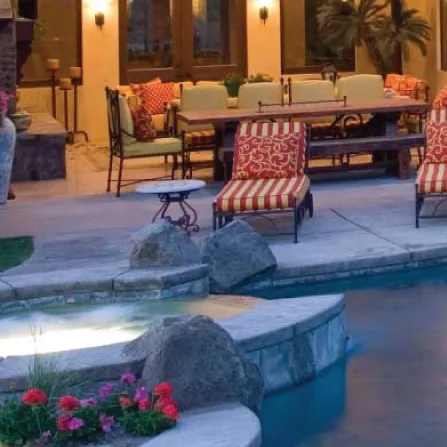
The Question That Settles This Faster Than Any Brochure
Set the two options side by side and homeowners tend to stall, because both columns look good. The tiebreaker is not price and it is not warranty language. It is this: how much is your property going to fight you?
A flat, open, generously sized lot in a newer master planned community with wide side yard access is close to ideal for a fiberglass installation. The crane has room, the soil under a graded subdivision is at least documented, and a molded shape will sit comfortably in a rectangular yard. A wooded lot in Memorial with a grade change, a protected tree, and eight feet of clearance between the house and the fence is a gunite property whether anyone likes it or not.
Then there is the middle ground, which is where most people actually live. That is where a real soil report and an honest site walk are worth more than any comparison chart on the internet, including this one.
Questions Houston Homeowners Wish They Had Asked Sooner
The regret pattern in this market is remarkably consistent. It is almost never about the shape or the tile. It is about the parts of the project that were invisible until they were not. These are the questions worth raising at the first meeting, when they are still cheap to answer.
- Has anyone tested the soil on this specific lot, or are we working from an assumption about the neighborhood?
- What is the plan for hydrostatic pressure if the water table comes up during a storm?
- Where does the water go when this yard floods, and does the new deck make that better or worse?
- Who pulls the permits and how does that timeline work in this jurisdiction?
- What happens to the schedule when it rains for nine days straight, which it will?
- Is there a hydrostatic relief valve in the design, and who is responsible for it later?
A builder who answers those calmly and specifically is telling you something useful about how the rest of the project will go. A builder who waves them off is telling you something too.
Drainage deserves its own conversation
Adding a pool and a deck to a Houston backyard changes how that yard sheds water, sometimes significantly. Hard surfaces do not absorb rain. If the design pushes runoff toward the house, toward a neighbor, or toward a low corner that already puddles, that becomes a permanent annoyance at best. Good builders bring this up before you do.
What a Good Decision Looks Like Five Summers From Now
The pools that age well in this city are not the ones with the most expensive tile. They are the ones where somebody took the ground seriously at the beginning. That might mean a gunite shell with an engineered beam and extra steel where the soil report said it mattered. It might mean a fiberglass shell set on a properly prepared base with backfill placed the slow, correct way instead of the fast way. Either path works when the decision was made with real information about the specific patch of Houston it is going into.
The choice between gunite and fiberglass is worth having a real conversation about rather than settling from a website. Bring a survey, bring photos of the access route, and bring the honest answer about how much maintenance you actually want in your life. The right shell tends to become obvious once those three things are on the table, and the pool that follows is one you stop thinking about entirely, which is exactly the point of owning one.
Let's talk about your backyard
Every lot in this city argues differently. Have us walk yours, and we will tell you honestly what it will and will not allow before you commit to anything.